

NEW FROM JAMES SCOULLER,
THE BEST SELLING AUTHOR OF
The Three Levels of Leadership
HOW TO BUILDWinning TeamsAGAIN AND AGAIN…
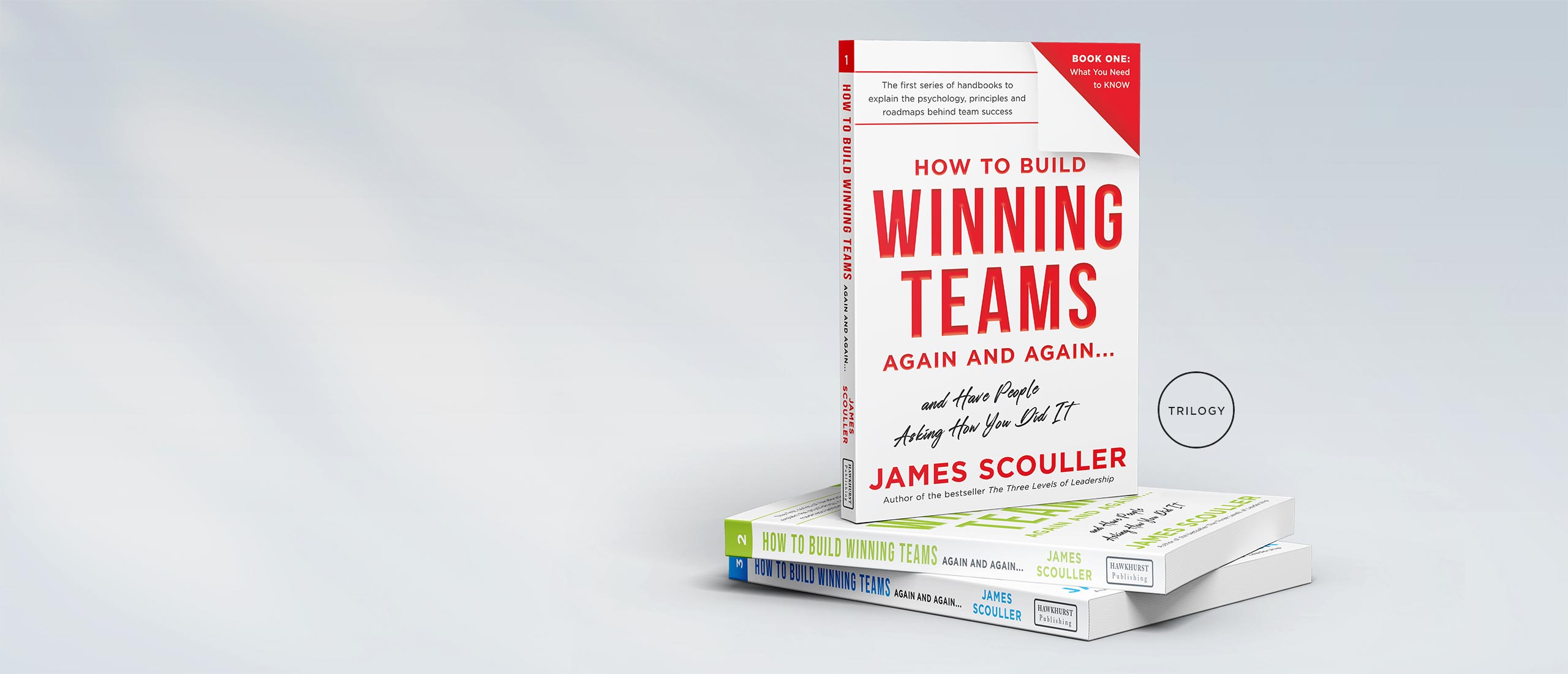
The first series of handbooks to explain the psychology, principles and road maps behind team success.
Sign up here to access my library of tools & articles
The Leadership Mastery Suite
Inspired by the idea of a musical composition with one underlying theme, the Leadership Mastery Suite is a set of three distinct pieces that combine to form one integrated learning framework. The three pieces are Mental Model Mastery, Self-Mastery and Knowhow Mastery.
You can compare the Leadership Mastery Suite to a Swiss Army knife. It gives you all the key ideas and tools you need to grow leaders and teams in one compact, simple, unified master model. It draws on the ideas and tools in my first book The Three Levels of Leadership and the three books in my How To Build Winning Teams trilogy.

LEADER TURNED COACH TURNED THOUGHT LEADER
I once led people as CEO. Now I coach leaders and write how-to books for people who are serious about growing themselves as leaders and team builders. Read more…

My Books

The Three Levels
of Leadership
The groundbreaking self-help manual for leaders wanting to grow their leadership presence, knowhow and skill.

How To Build Winning Teams
TRILOGY
The first series of handbooks to explain the psychology, principles and road maps behind team success.
Read what people are saying about the How To Build Winning Teams trilogy
A thorough, worthwhile and accessible analysis of the formation and improvement of teams. OUR VERDICT ✔ GET IT
Kirkus Reviews, who only give their "Our Verdict – Get It" award to books they consider exceptional. This was for Book #1 of the How To Build Winning Teams trilogy. Kirkus haven't reviewed the other two books.
A brilliant and definitive analysis of high performing teams – what differentiates them, how to create them, how to sustain and re-generate them.
Jim Kennedy, Senior Vice-President, People, Shionogi Europe
James Scouller has taken on a massive task in explaining and developing teamwork and has delivered with power, style and great insight.
Jarlath F Benson, Author of Working More Creatively With Groups, Former Director N. Ireland Institute of Human Relations, Former Director of the Institute of Psychosynthesis London. Group Analyst and Psychotherapist
James Scouller’s trilogy is a gift to anyone feeling overwhelmed when facing current and future challenges as it helps us understand the power of ‘together’ versus ‘alone’.
Jerry D. Estenson, Professor Emeritus, College of Business, California State University, Sacramento
This is the most in-depth, rigorous work I have seen on working with groups in corporate settings, SMEs, nationals, globals and public organisations.
Roger Evans, Author of Five Dimensions of Leadership, co-author of The Creative Manager, co-founder of the London Institute of Psychosynthesis, Management Consultant and Psychotherapist
Any leader who is serious about developing teams ignores this trilogy at their peril.
Ian Proctor, Chairman, Flutter UK & Ireland
James Scouller’s groundbreaking trilogy provides us with an insightful yet accessible take on group psychology and team building.
Joanna Czynsz-Piechowiak, CEO Poland & Ukraine, Saint-Gobain
These books provide a compelling and comprehensive approach for those seeking to navigate the complexities of developing successful teams. They aid in uncovering underlying issues and offer a roadmap for steering teams toward sustained effectiveness.
Graham Lee, Leadership Coach & author of Breakthrough Conversations for Coaches, Consultants and Leaders
Latest Articles


Sign up here to access my library of tools & articles





Coaching
I offer two forms of coaching: executive coaching and team coaching. In both cases I draw on ideas and tools from my books.
Executive Coaching
Executive coaching is a confidential, one-to-one, measurable process for people who are serious about growing themselves as leaders.
Team Coaching
Team coaching is a guided and again, measurable, learning pathway for work groups wanting to become and stay genuine teams … and boost their results.


